

Airside space has become one of the most valuable resources in airport operations. As traffic grows, turnaround windows tighten, aircraft stands become busier, and more equipment is introduced to support modern ground handling, the apron is under constant pressure. For airports, airlines, MROs, and ground handlers, this is no longer only a question of layout. It is a question of operational efficiency.
Ground power units are part of this discussion. Aircraft need reliable 400 Hz and 28.5 VDC power during servicing, maintenance, and pre-flight operations. That requirement has not changed. What has changed is the environment in which this equipment operates. Aprons are more congested, safety expectations are stricter, and equipment movement around the aircraft is under closer control. This is why compact GSE design matters.
A compact mobile GPU is not valuable simply because it is smaller. It is valuable when it helps the operation work better. Smaller equipment can be easier to position, easier to move between stands, and easier to integrate into constrained working areas. In busy airport environments, that can make a real difference.
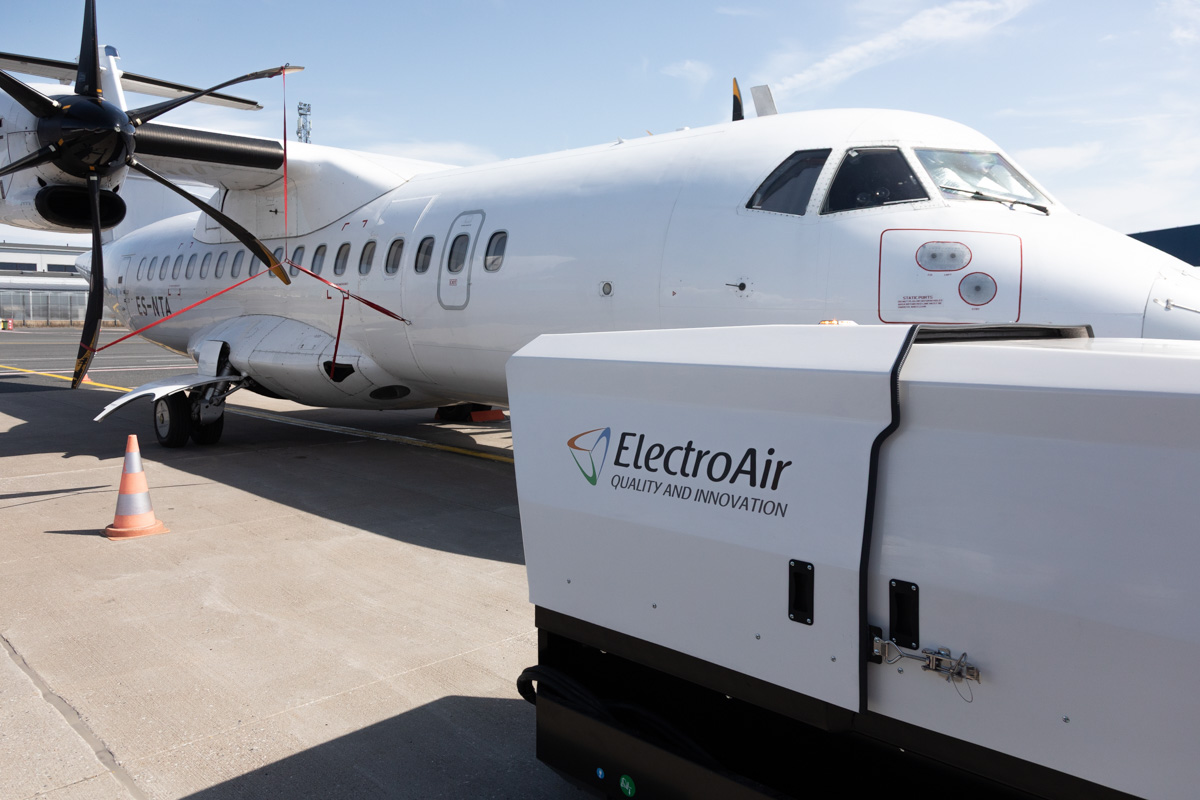
Apron congestion creates practical problems. Too much equipment around an aircraft can slow down handling teams, increase the risk of movement conflicts, complicate towing and pushback preparation, and reduce visibility for operators. It also makes stand discipline harder to maintain. When GPUs, belt loaders, baggage carts, fuel trucks, service vehicles, and passenger boarding equipment all compete for space, equipment footprint becomes an operational factor.
This is especially relevant at remote stands, regional airports, maintenance areas, cargo aprons, and older airport layouts where space was not designed for today’s equipment density. It is also relevant during construction phases, temporary stand changes, and peak traffic periods, when the operation has to remain flexible despite physical constraints.
For MROs, the issue is slightly different but just as important. Hangars and maintenance aprons often require equipment to move around aircraft in tight spaces. Technicians need access. Cables need to be routed safely. Power must be reliable, but the GPU should not become an obstacle to the maintenance workflow. In this environment, compact design supports both safety and productivity.
However, compactness alone is not enough. The wrong equipment can be small but underpowered, difficult to service, or poorly suited to daily use. Decision-makers should therefore look at compact design together with output performance, durability, service access, cable handling, environmental protection, and long-term maintainability. This is where the specification process becomes important.
A ground power unit should be evaluated not only by its rated output, but by how well it fits the actual operating environment. Can it support the aircraft types in the fleet? Can it operate reliably in outdoor conditions? Can technicians access key components without unnecessary downtime? Can it be moved safely and efficiently? Does it reduce clutter, or does it simply add another piece of equipment to an already crowded stand?
The best GSE investments solve more than one problem at the same time. A compact GPU with strong output can support aircraft servicing while reducing equipment bulk. A lower-emission engine platform can help align with sustainability expectations while preserving mobile independence. Optional plug-in utility power can reduce fuel use where infrastructure exists, while diesel capability can continue supporting stands where fixed power is not available.
This kind of flexibility is increasingly relevant in 2026 aviation priorities. Airports are expected to modernize, reduce emissions, and improve apron efficiency, but they cannot interrupt daily operations to do it. Ground handlers need equipment that supports productivity under time pressure. MROs need solutions that fit their working environment. Procurement teams need assets that remain relevant as infrastructure develops.
For operators looking more closely at this balance, ElectroAir has shared additional insight on compact aircraft ground power units and the role of lower-emission mobile GPUs in the transition toward more efficient ground operations. The ElectroAir APA-100 is one example of this design direction, combining a compact mobile format with strong output capability, Stage V / Tier 4 Final engine technology, and optional plug-in hybrid utility power.
The wider point is not about one unit or one product category. It is about how ground support equipment is selected in a more demanding operating environment.
In the past, many procurement decisions focused mainly on whether the equipment could deliver the required power. Today, that is only the starting point. The equipment must also fit the apron, support safe movement, reduce operational friction, and remain serviceable throughout its lifecycle. It must work not only in ideal conditions, but in the real conditions of airport and maintenance operations.
Compact design should therefore be seen as part of operational strategy. It supports better use of space, more disciplined equipment positioning, and smoother aircraft servicing. When combined with reliability, serviceability, and the right power capability, it can help operators improve daily performance without waiting for a complete infrastructure redesign.
The future apron will not only depend on cleaner technology. It will also depend on smarter use of space. Ground support equipment that understands this reality will become increasingly important for airports and aviation service providers working under pressure to do more with limited room.